iPhone Spreads
“I don’t have a nice camera, so I don’t think my book will turn out as good.”
If you’ve ever thought that, this post is for you.
Photography has been one of my favorite hobbies for most of my life. I love pulling out my big “work” camera to photograph my own kids, and recently I’ve fallen in love with 35mm film. There’s something about the softness, the grain, the anticipation of waiting for scans that makes everyday moments feel sacred. Because of that, many of the images in our family Archives come from my DSLR or film cameras.
But here’s the honest truth: I don’t always have a fancy camera with me.
And some of my very favorite spreads — the ones that make me pause and feel something — were taken on my iPhone.
Your photo book is not about proving you own the best gear. It’s about preserving your life. And life doesn’t wait for you to grab the “good” camera.
So today I want to share some encouragement — and a few practical tips — if you’re building your photo book archives with mostly phone images.
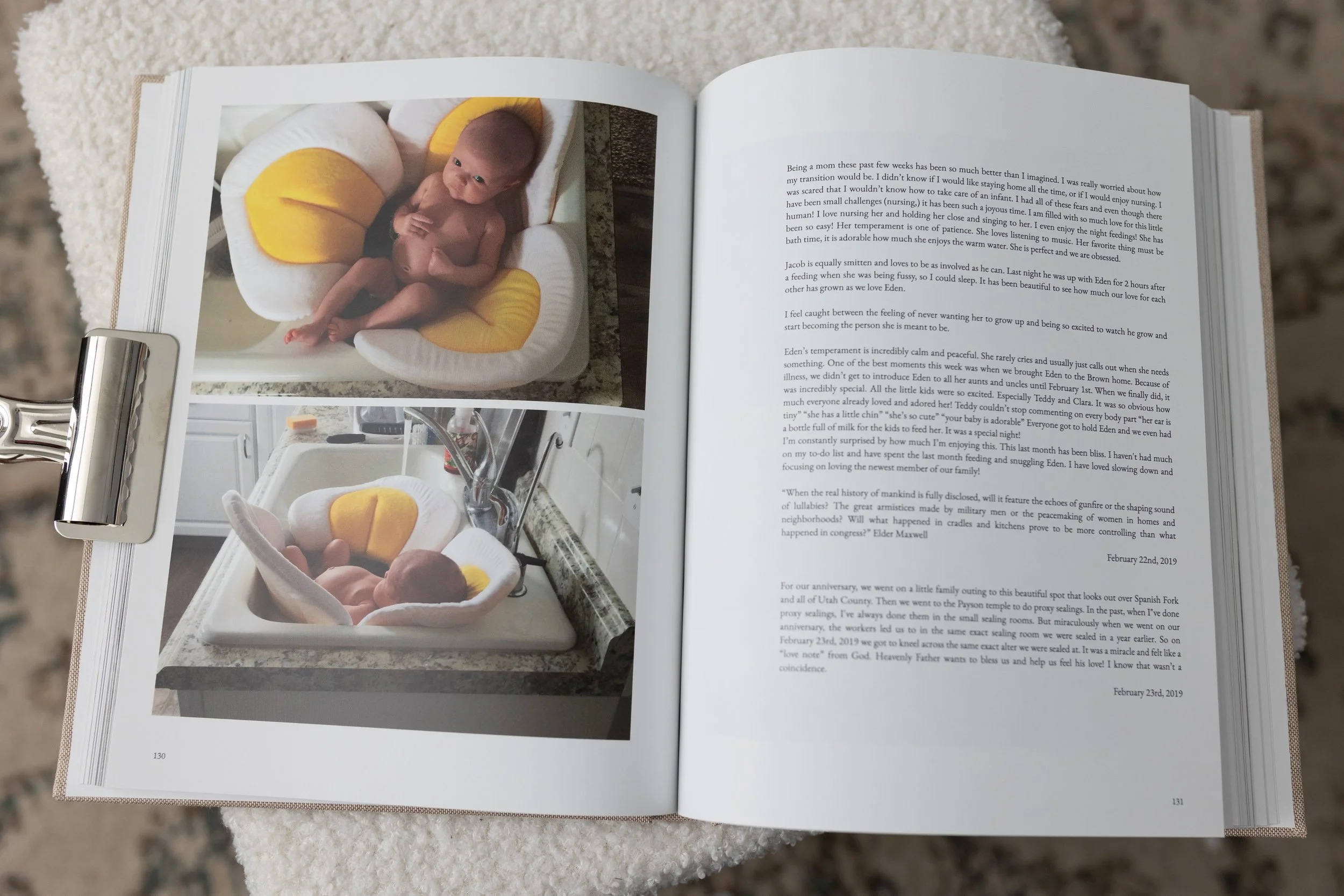
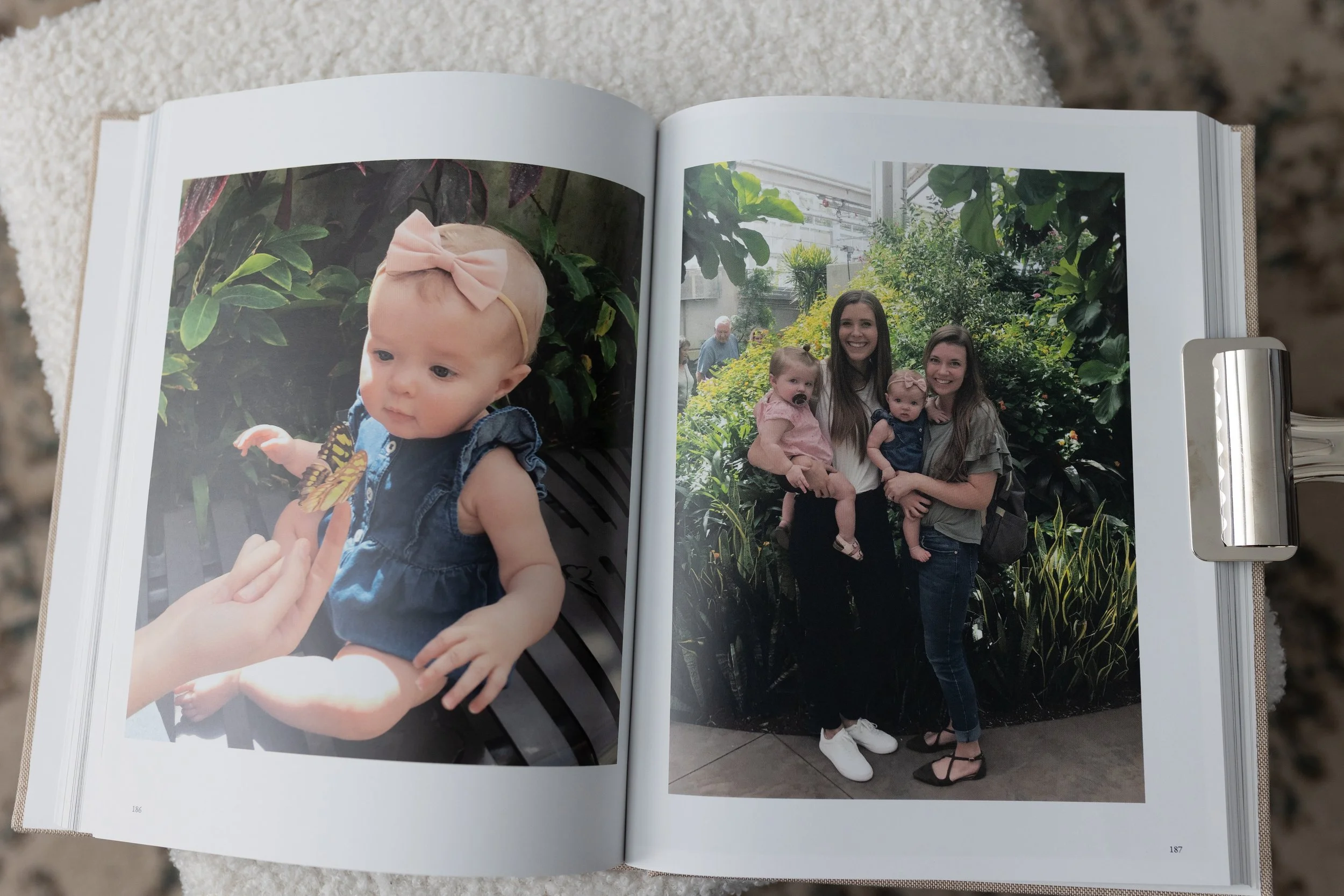

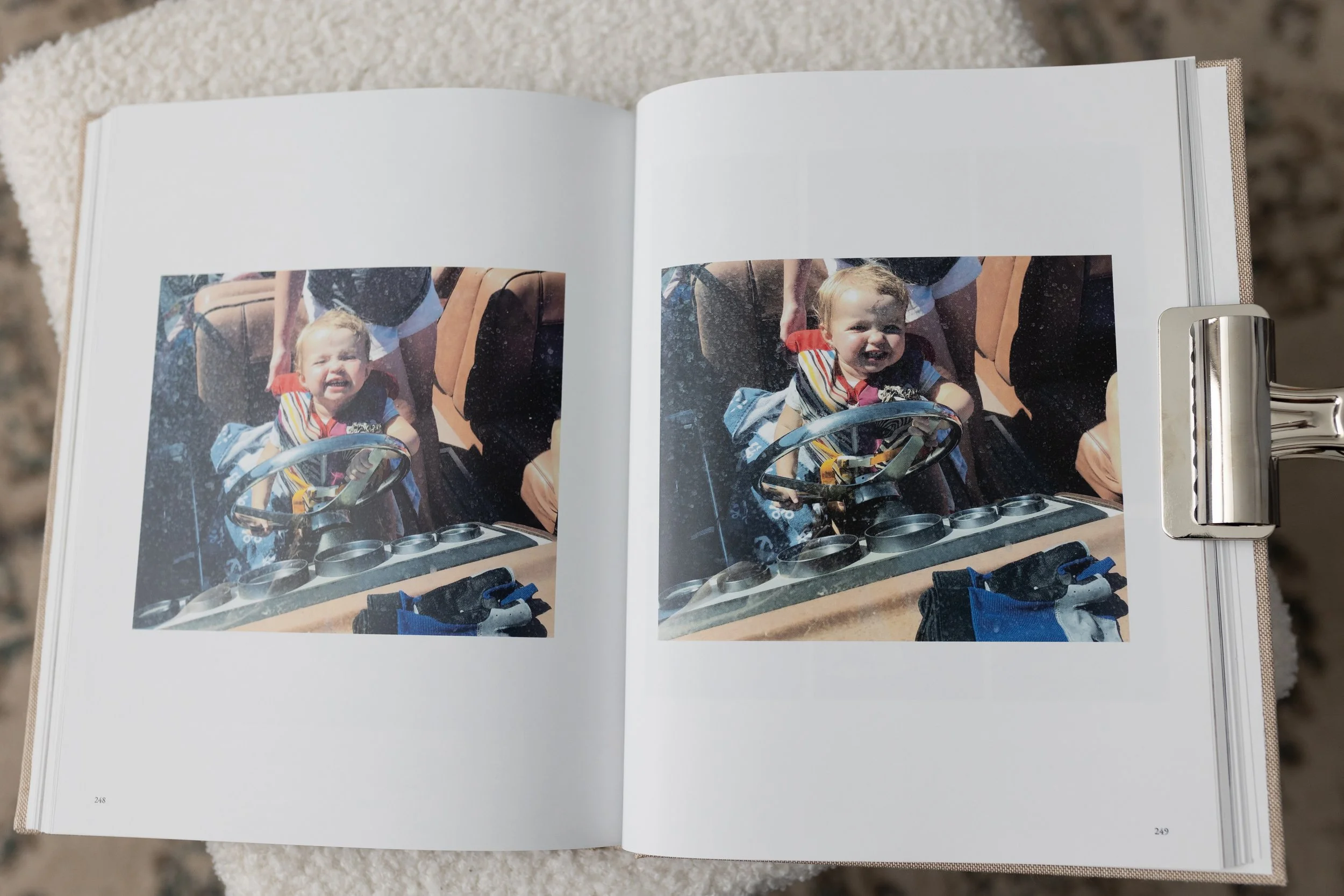
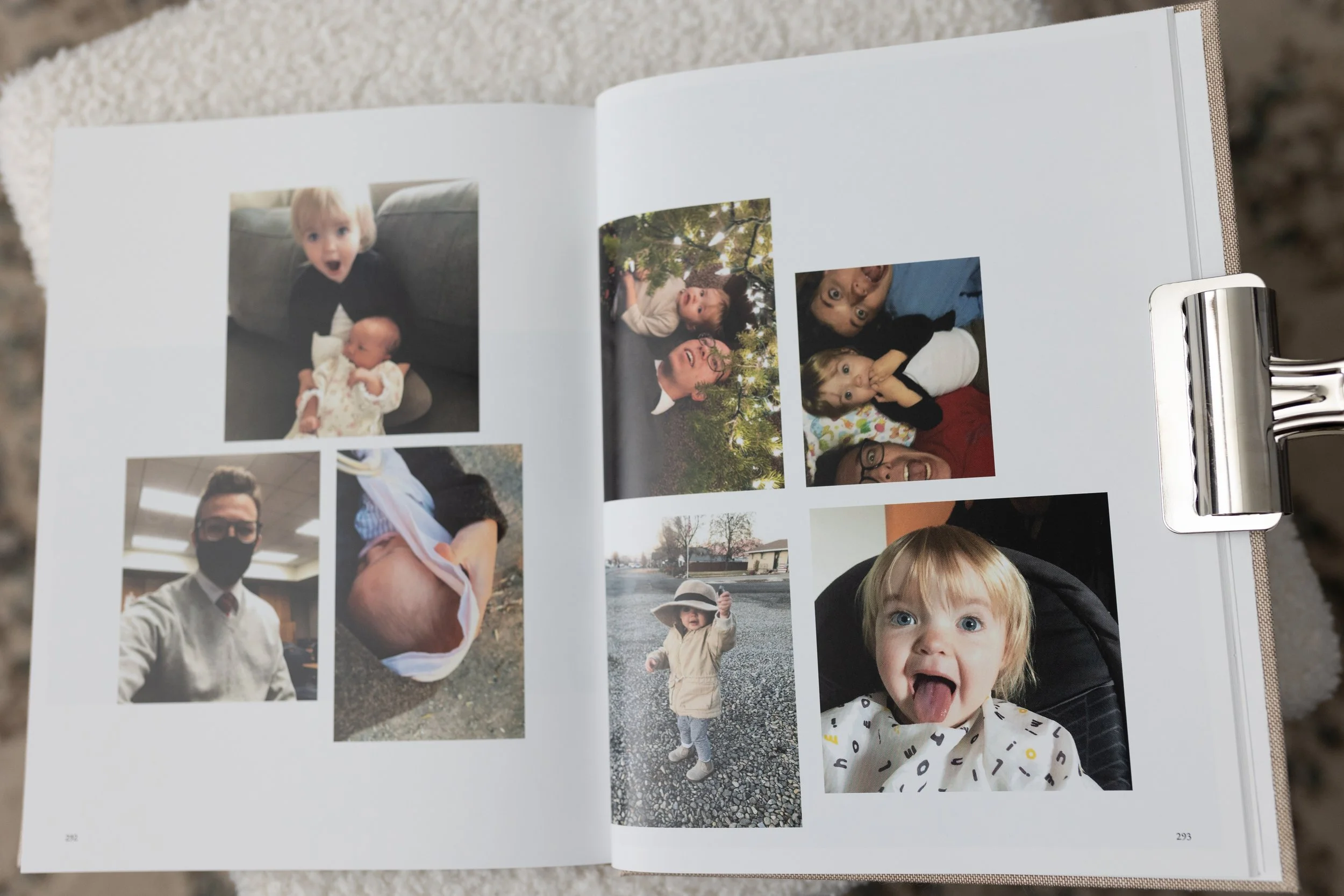
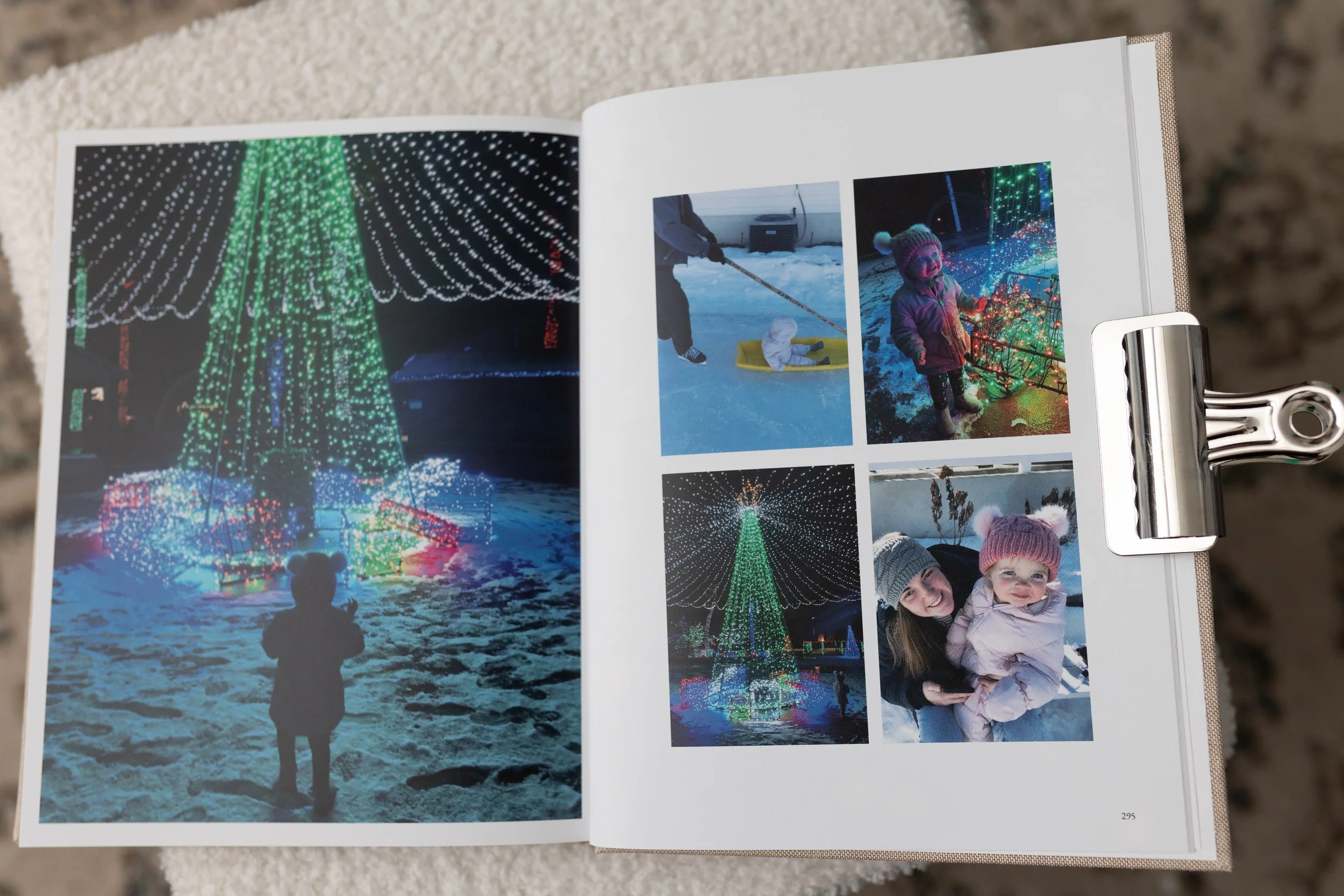
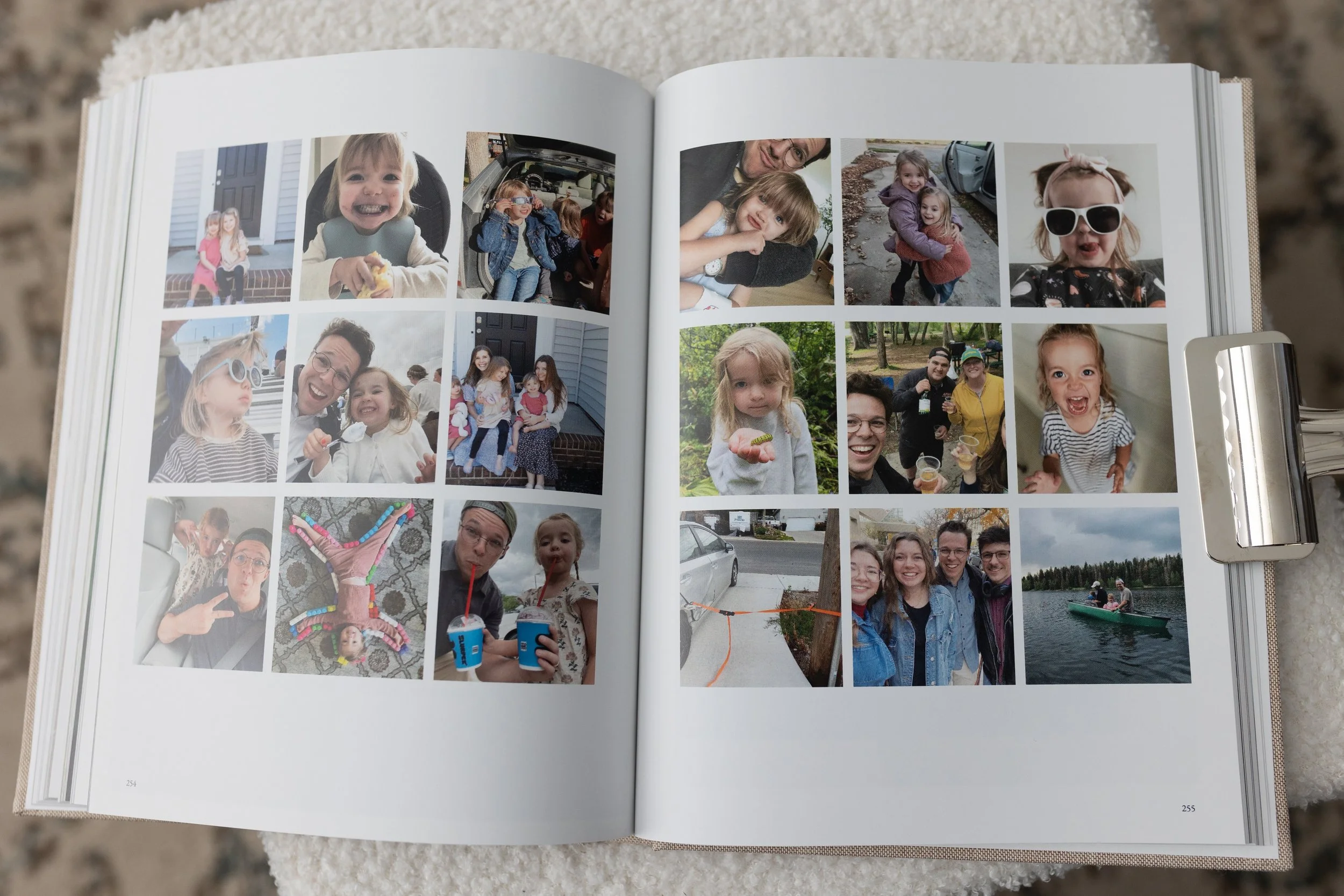
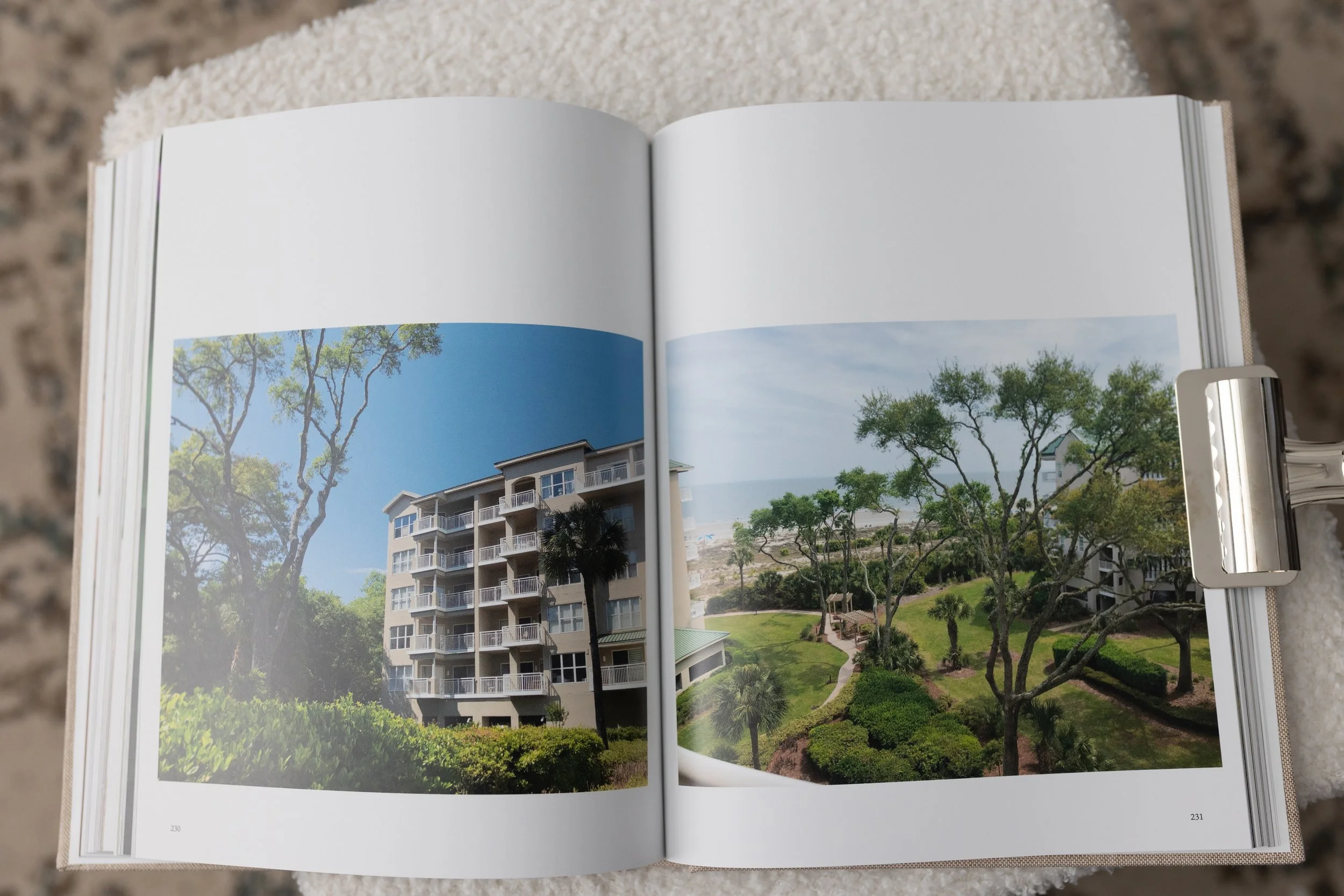
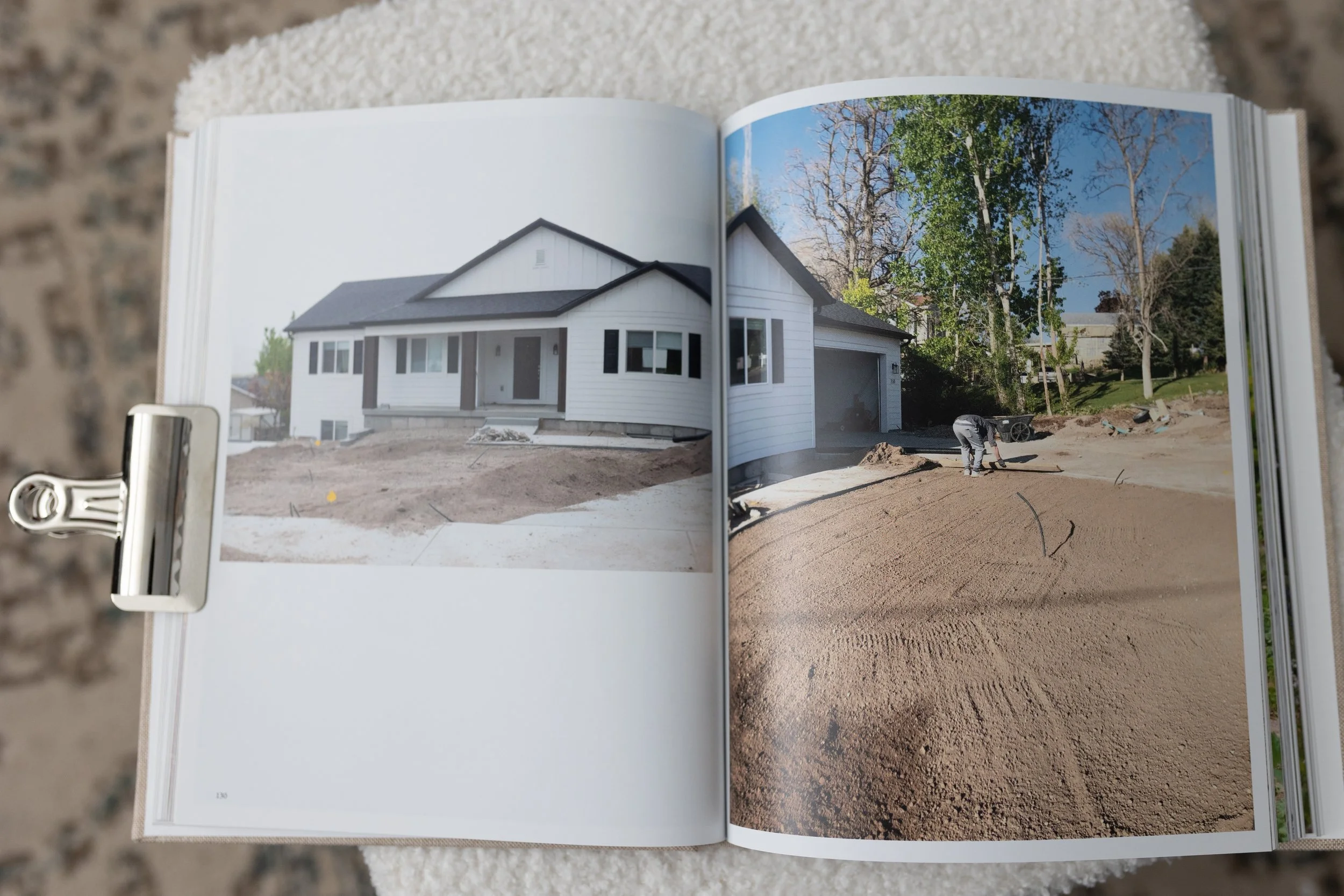
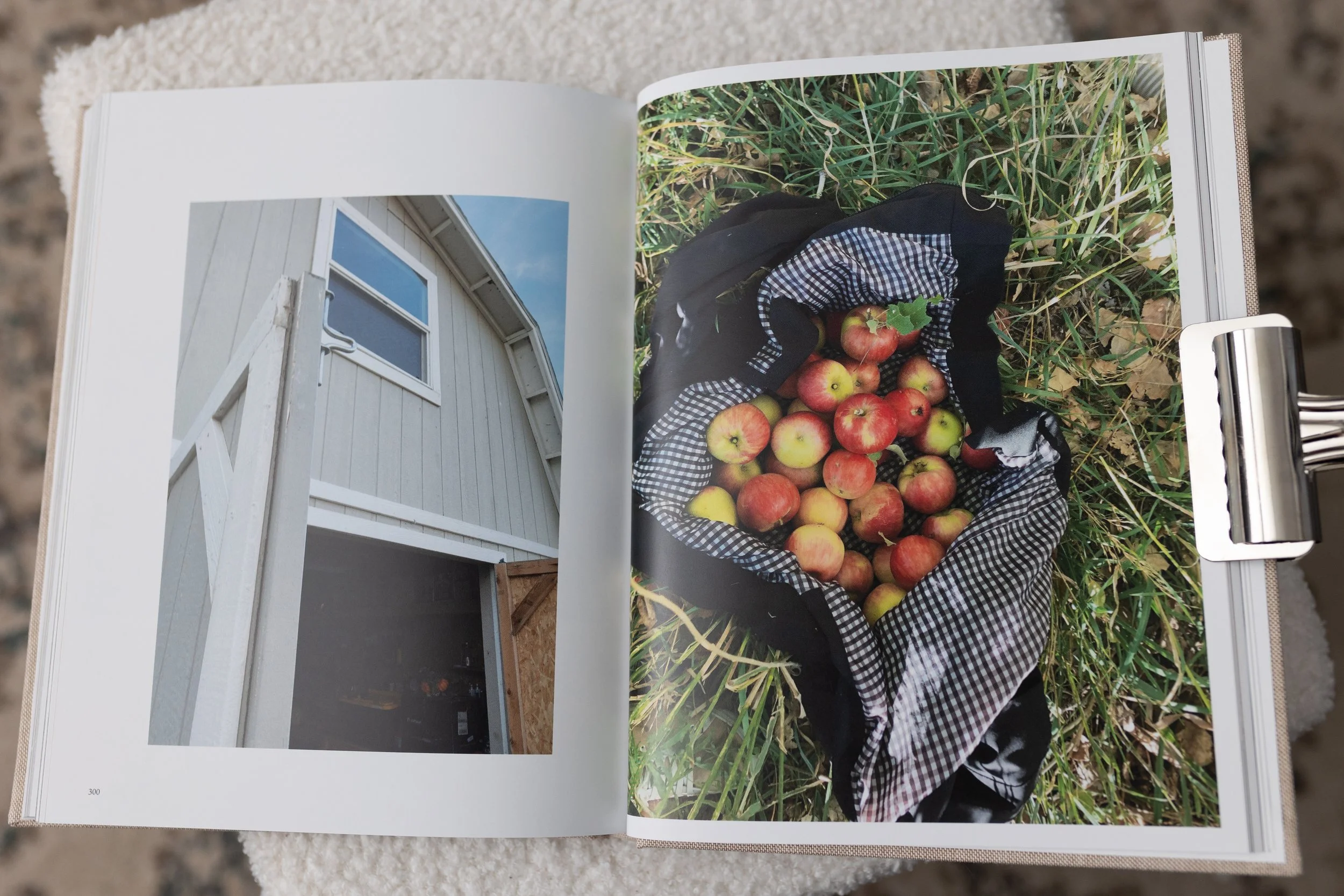
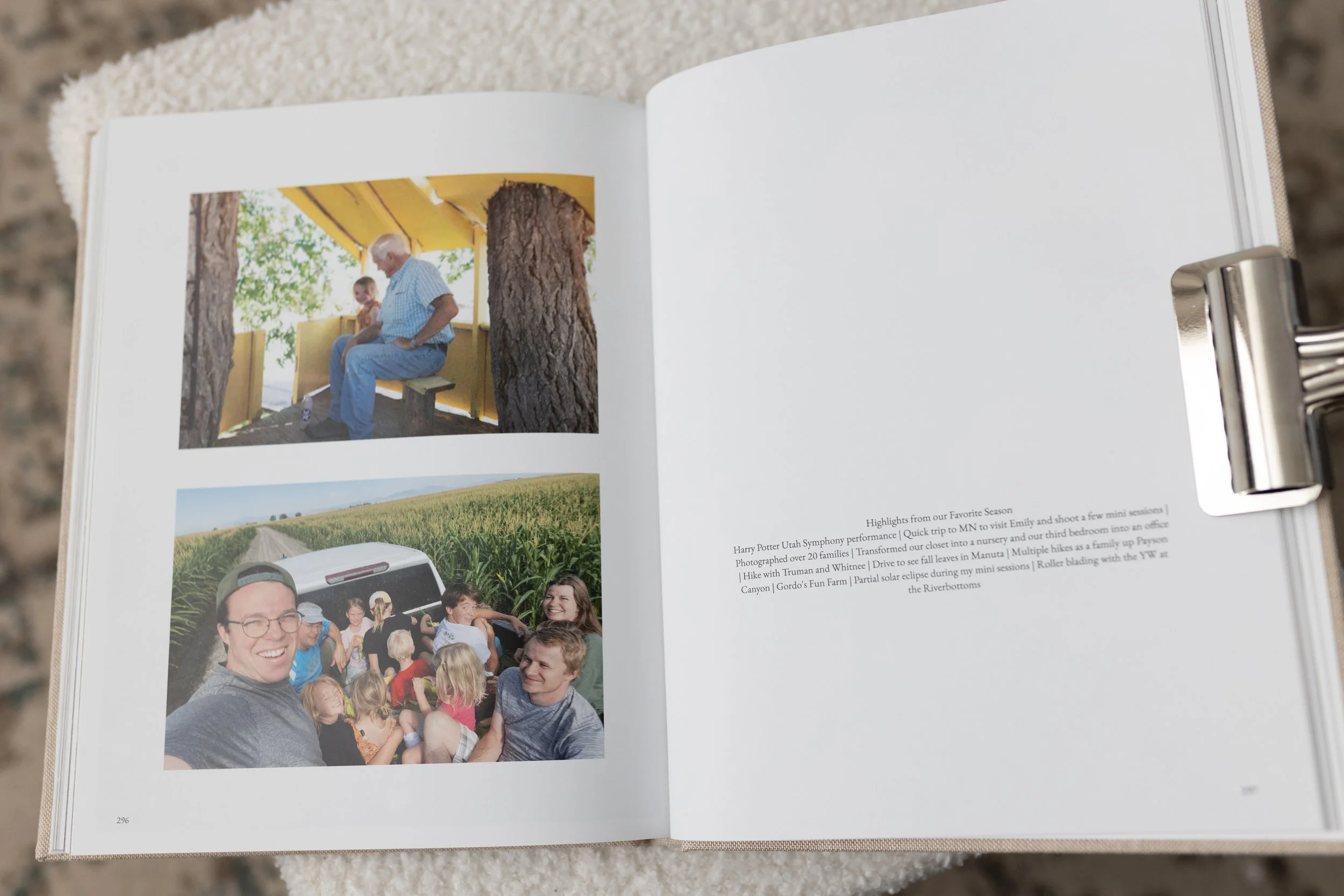
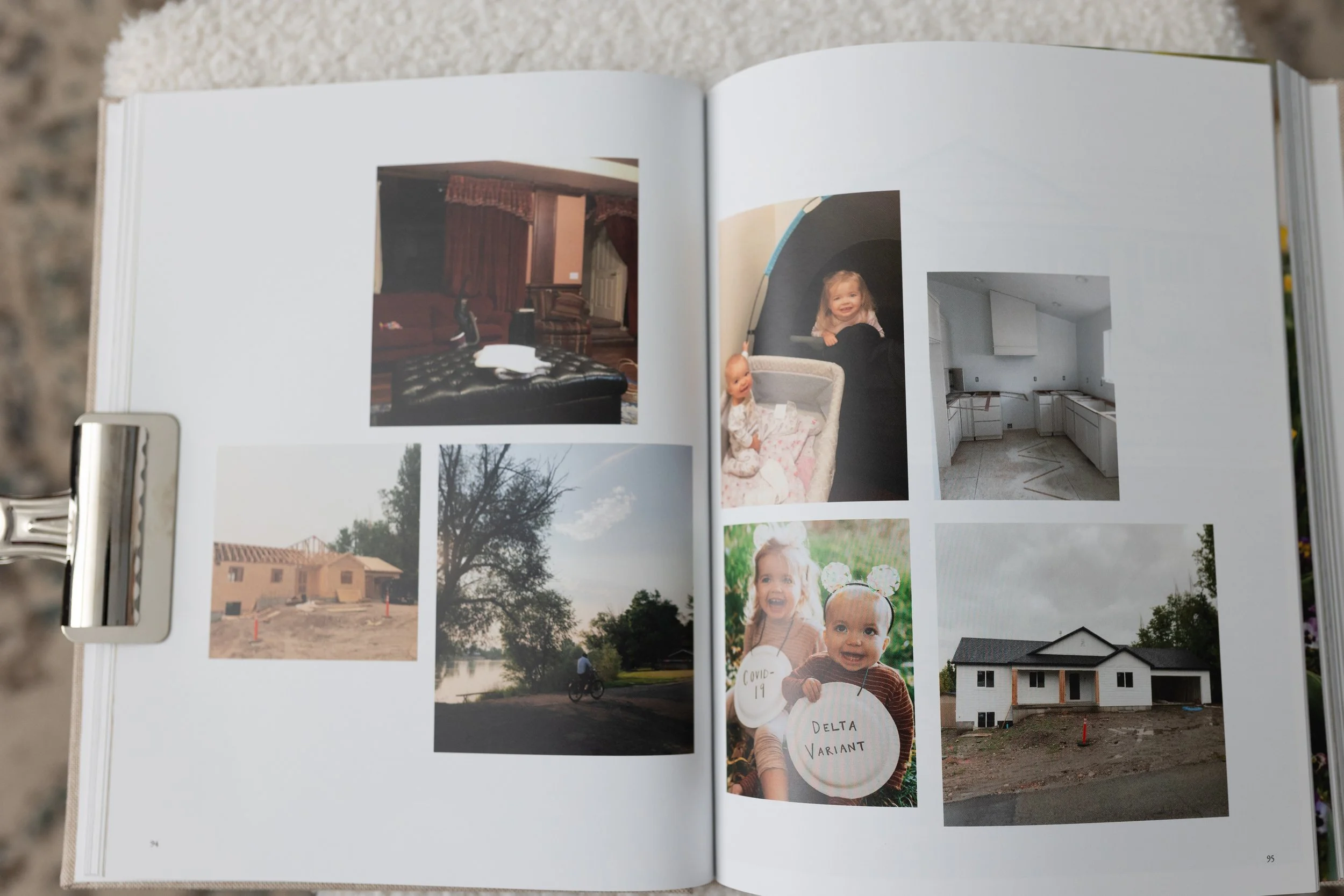
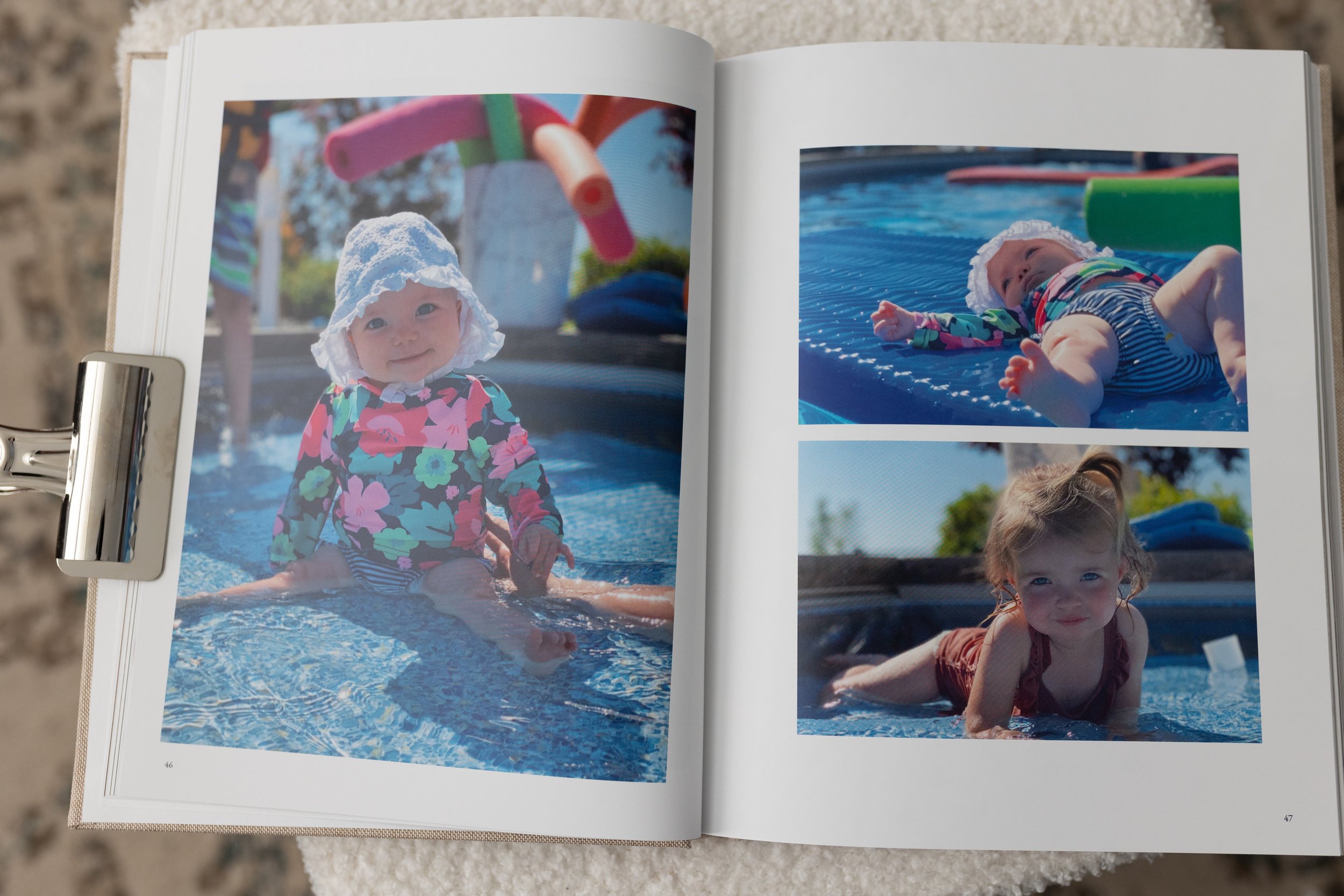
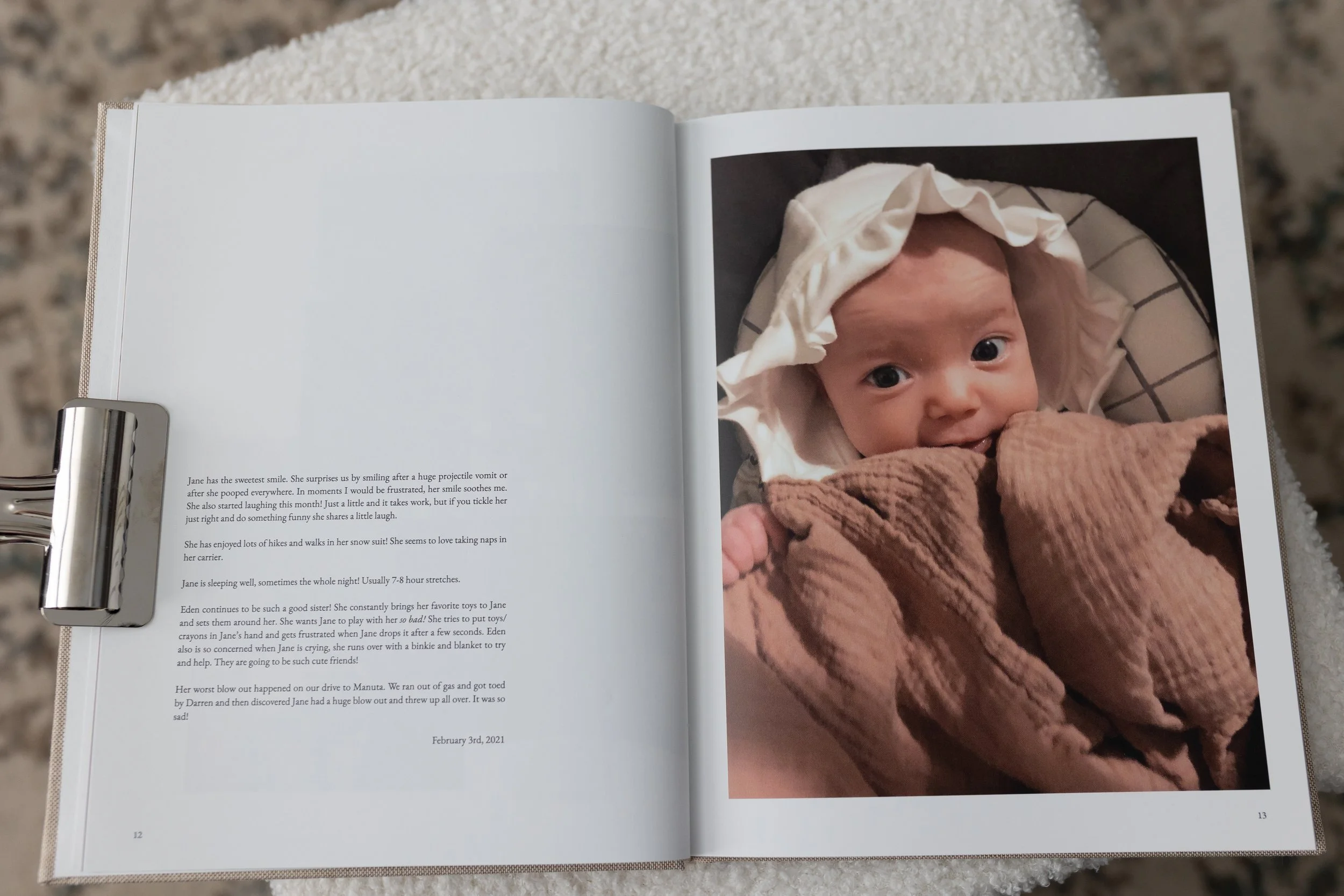
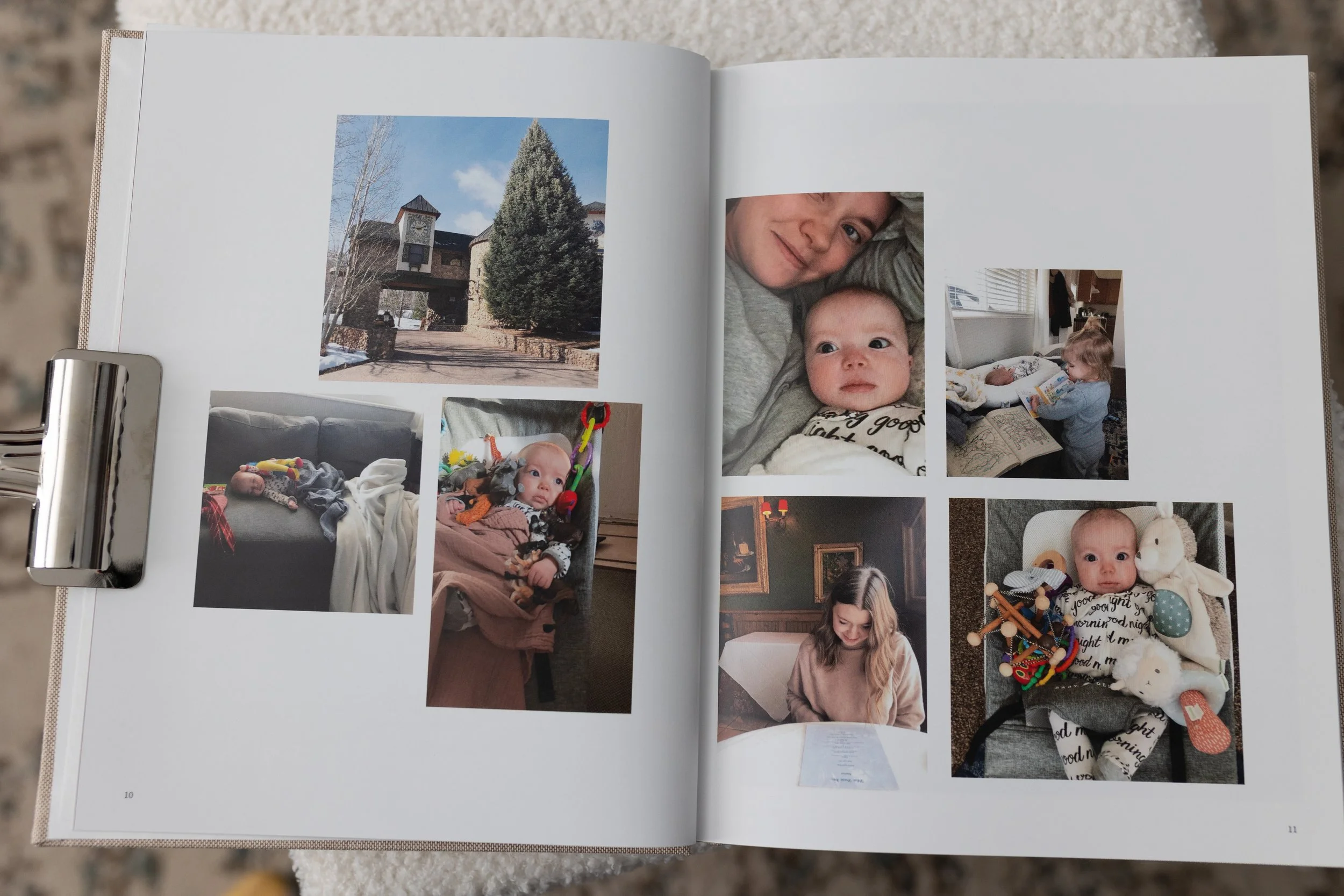
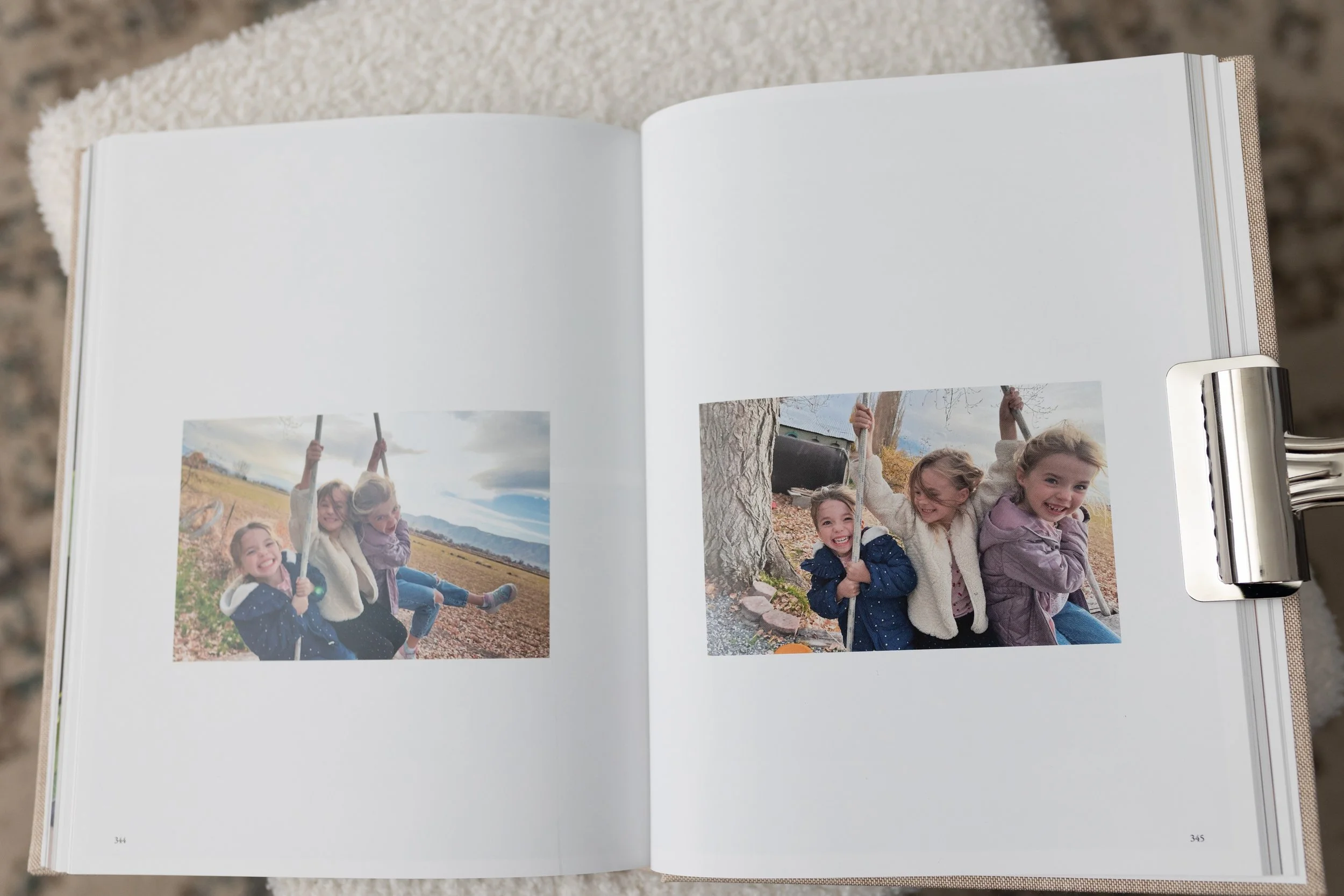
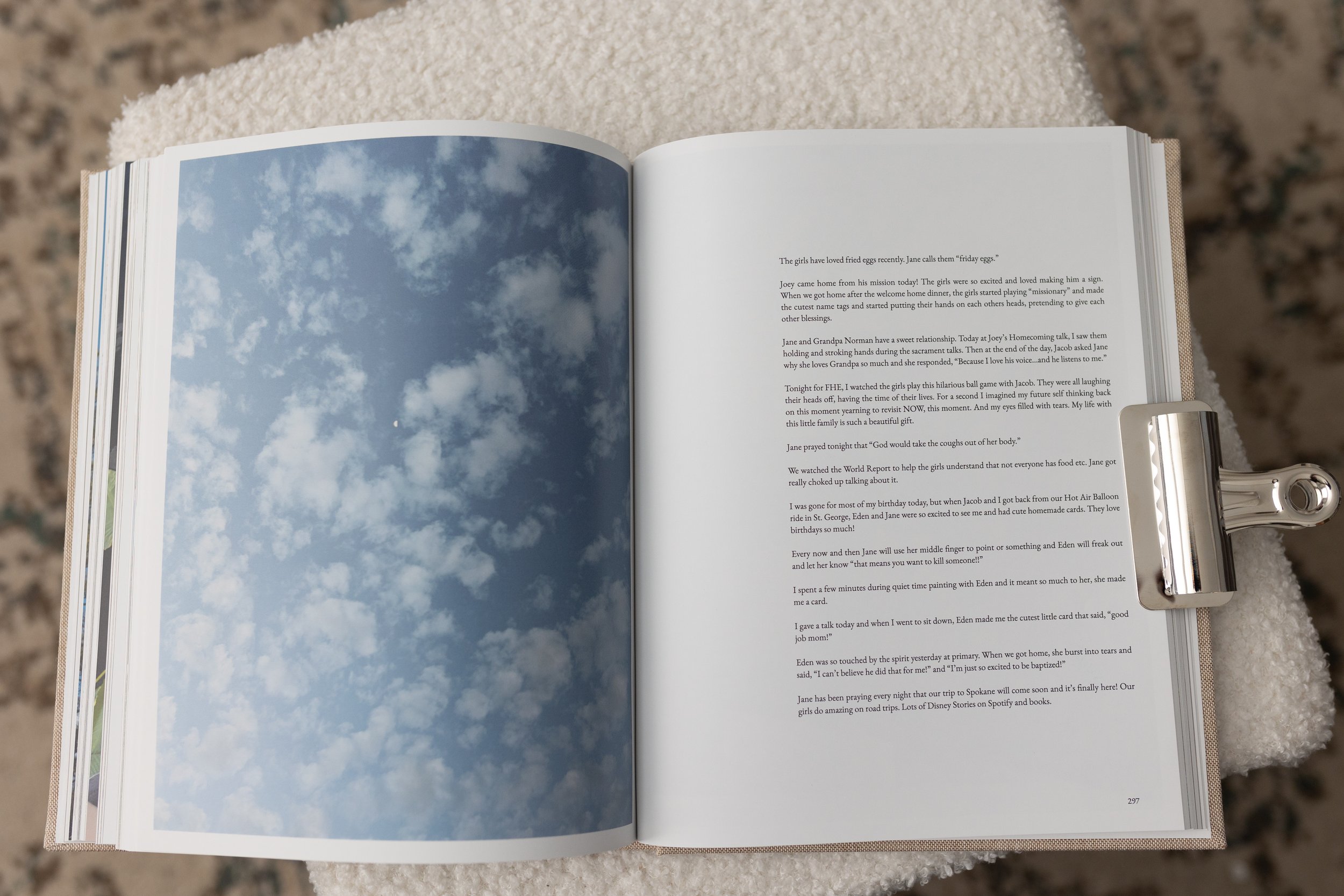
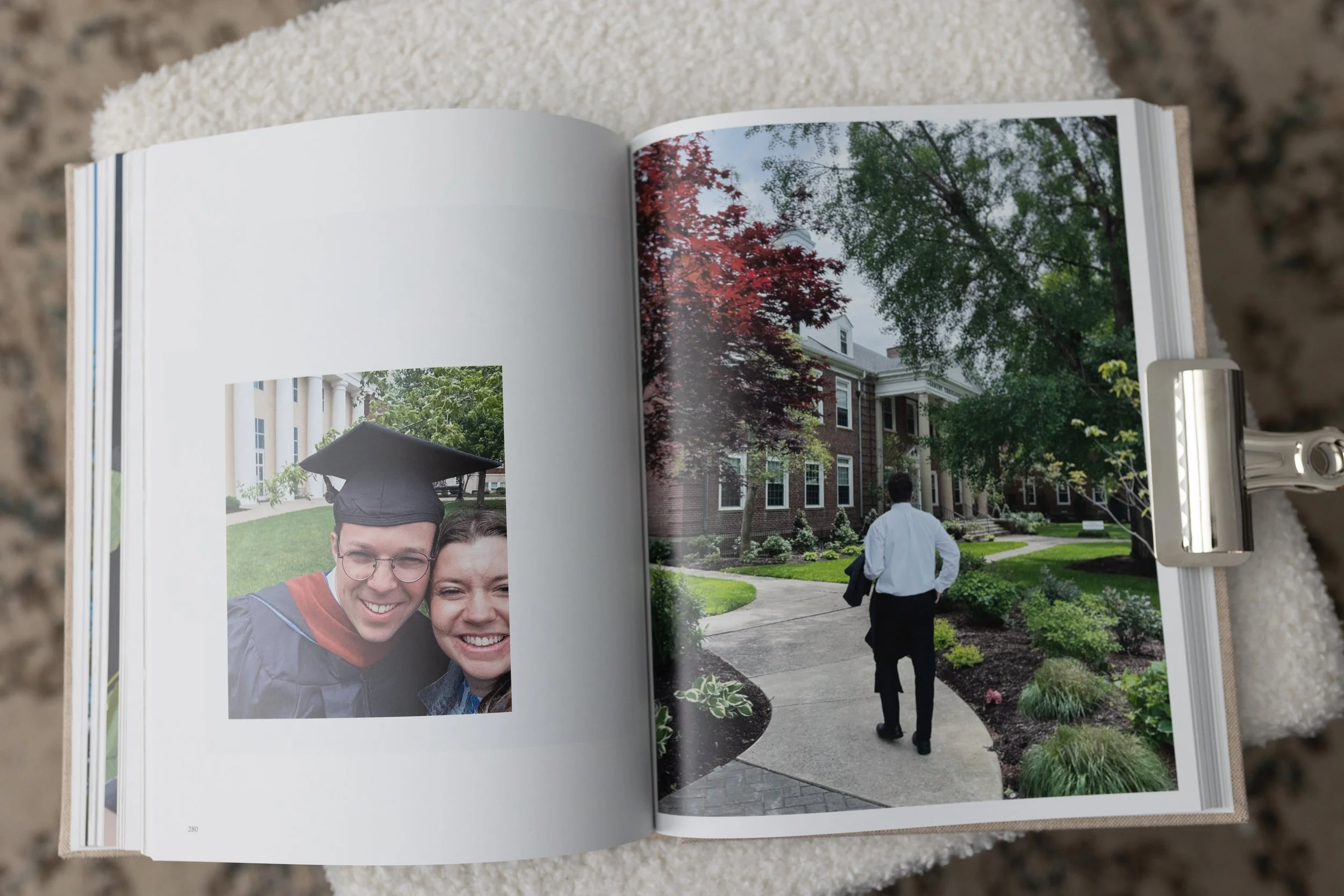
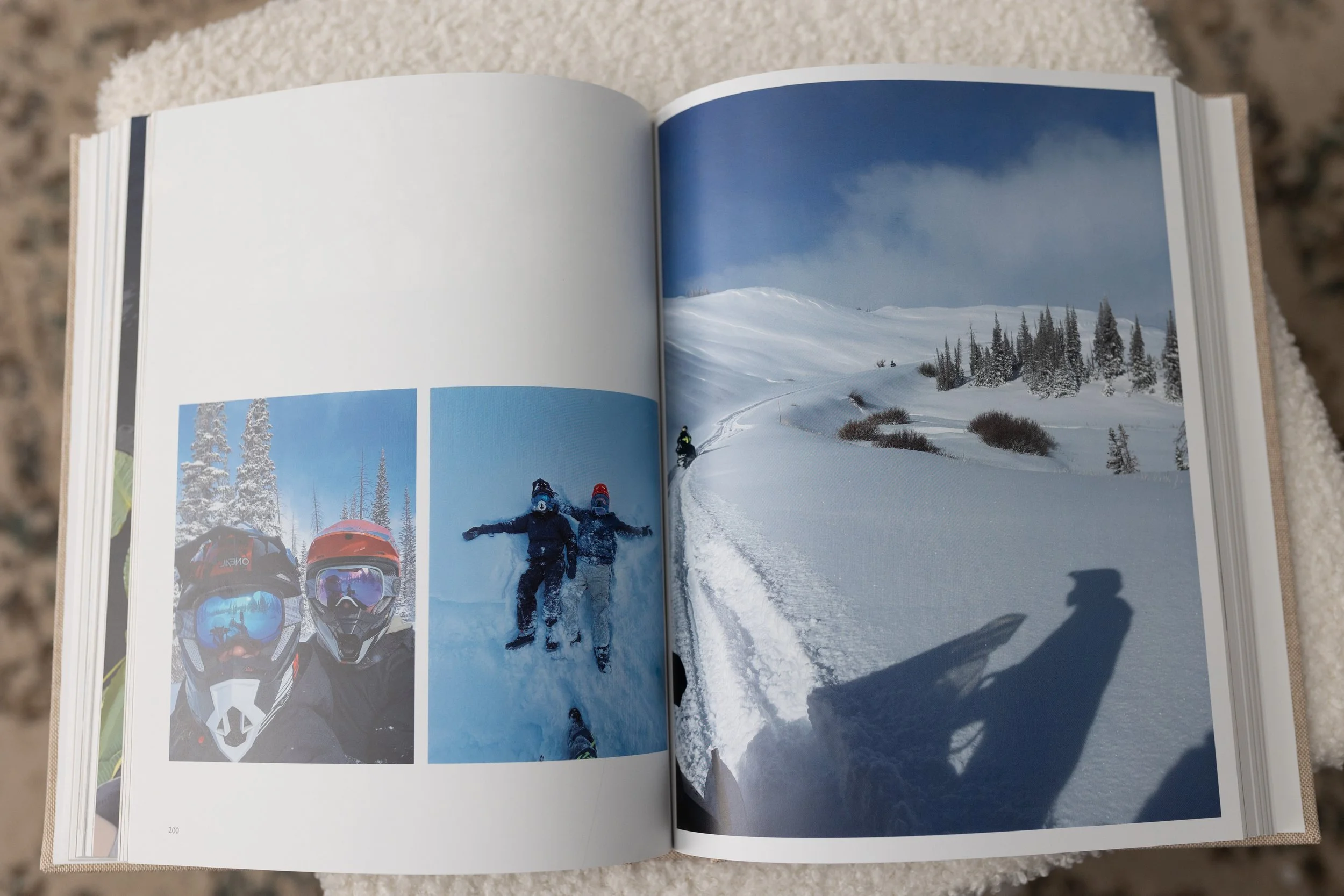
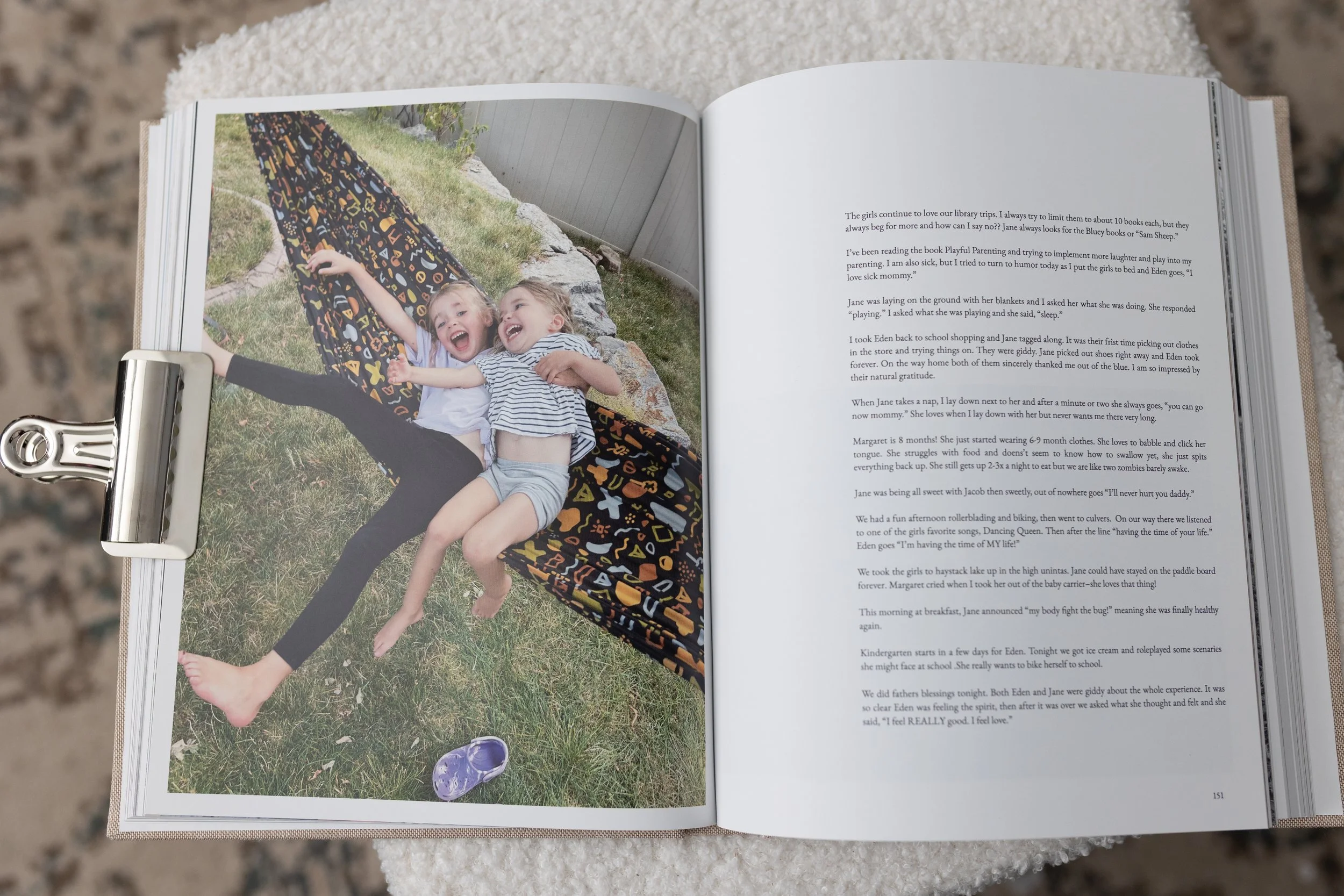
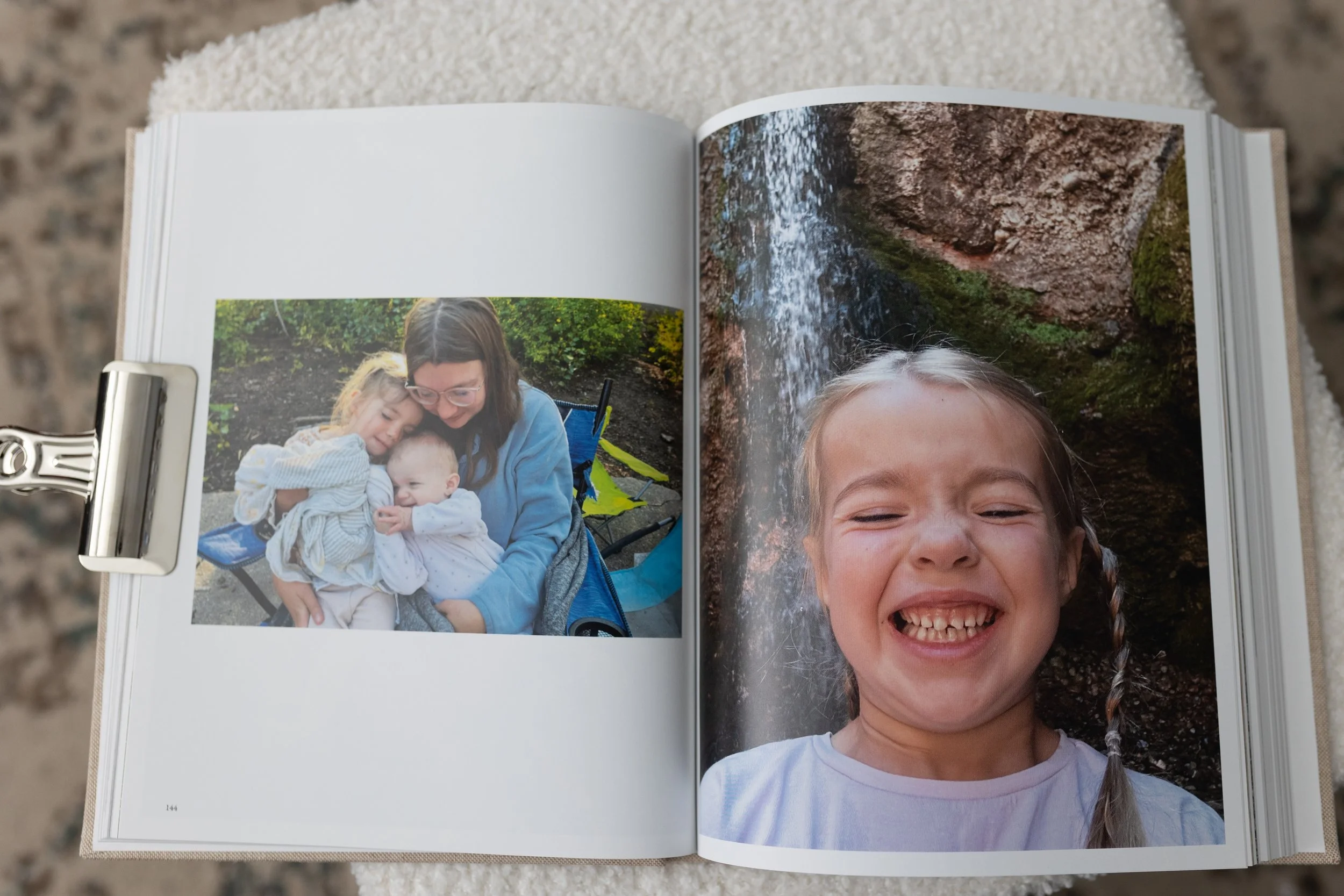

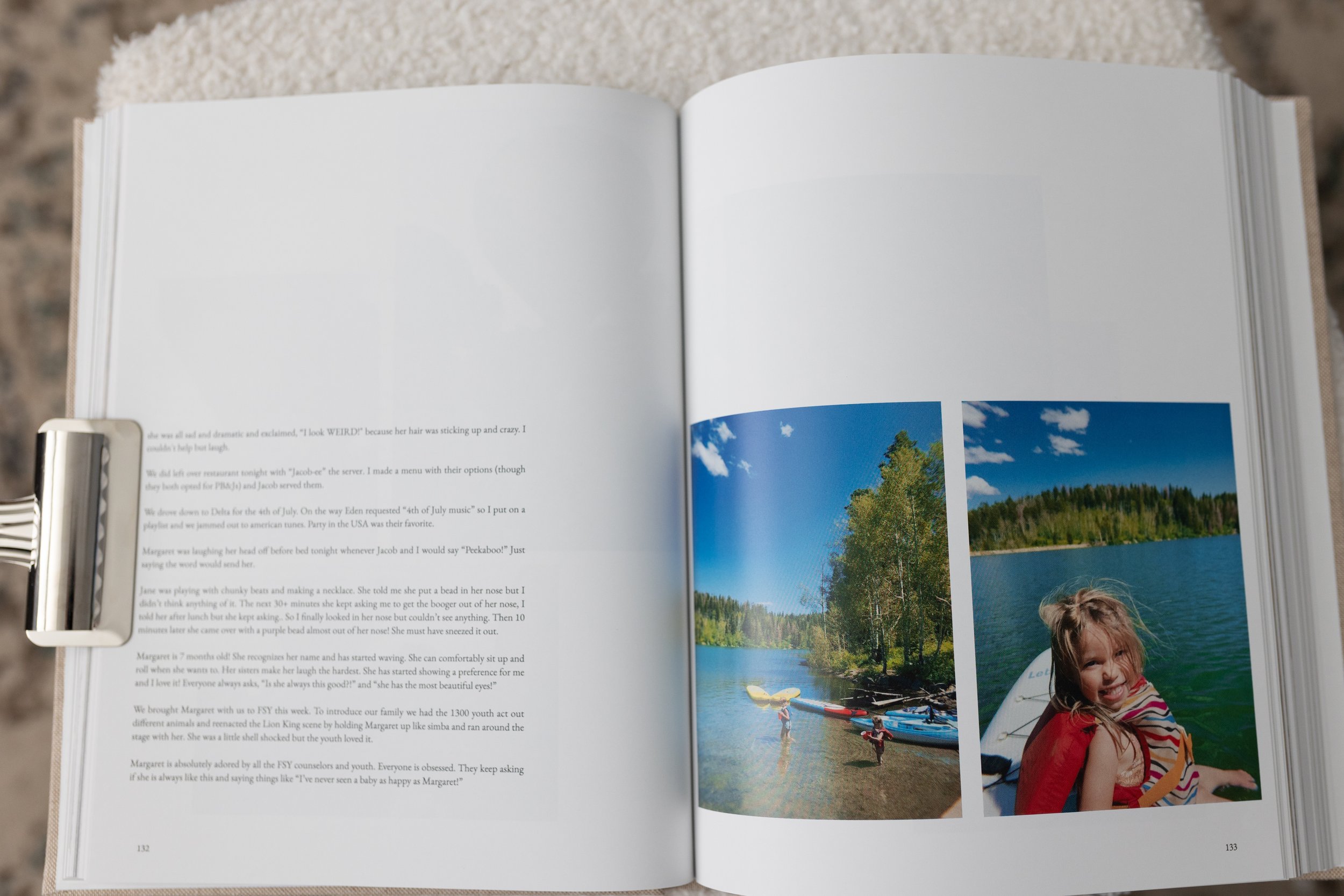
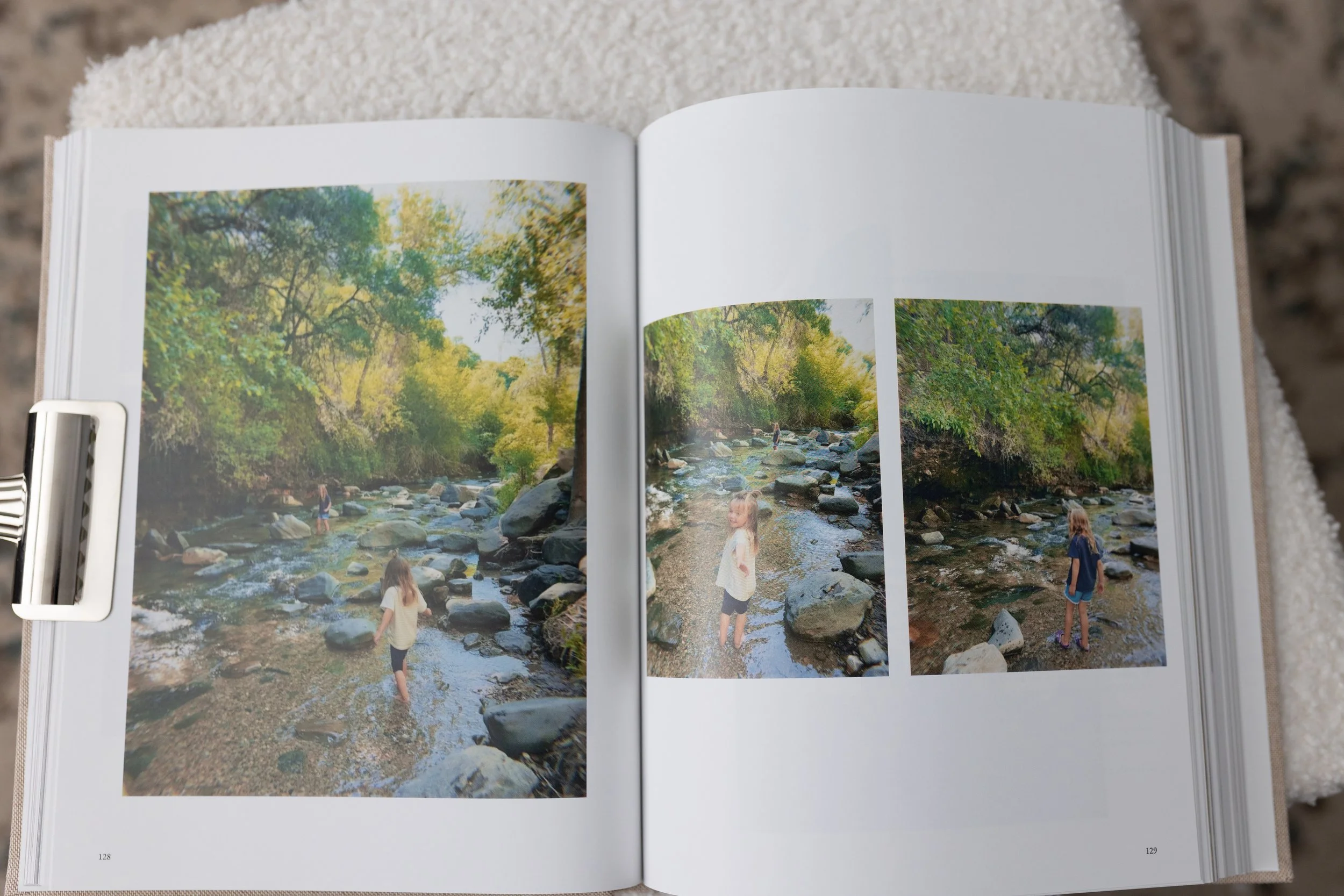
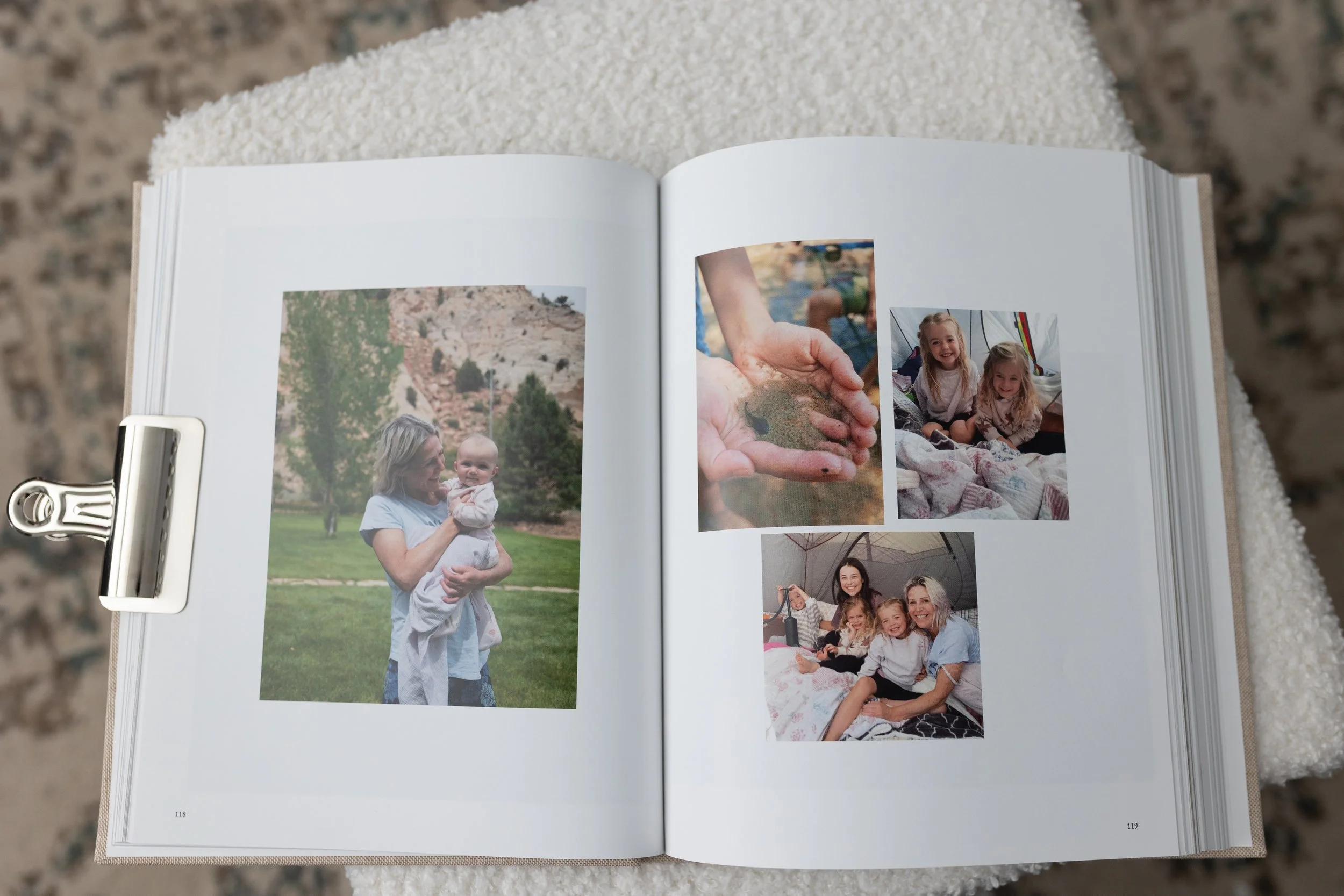
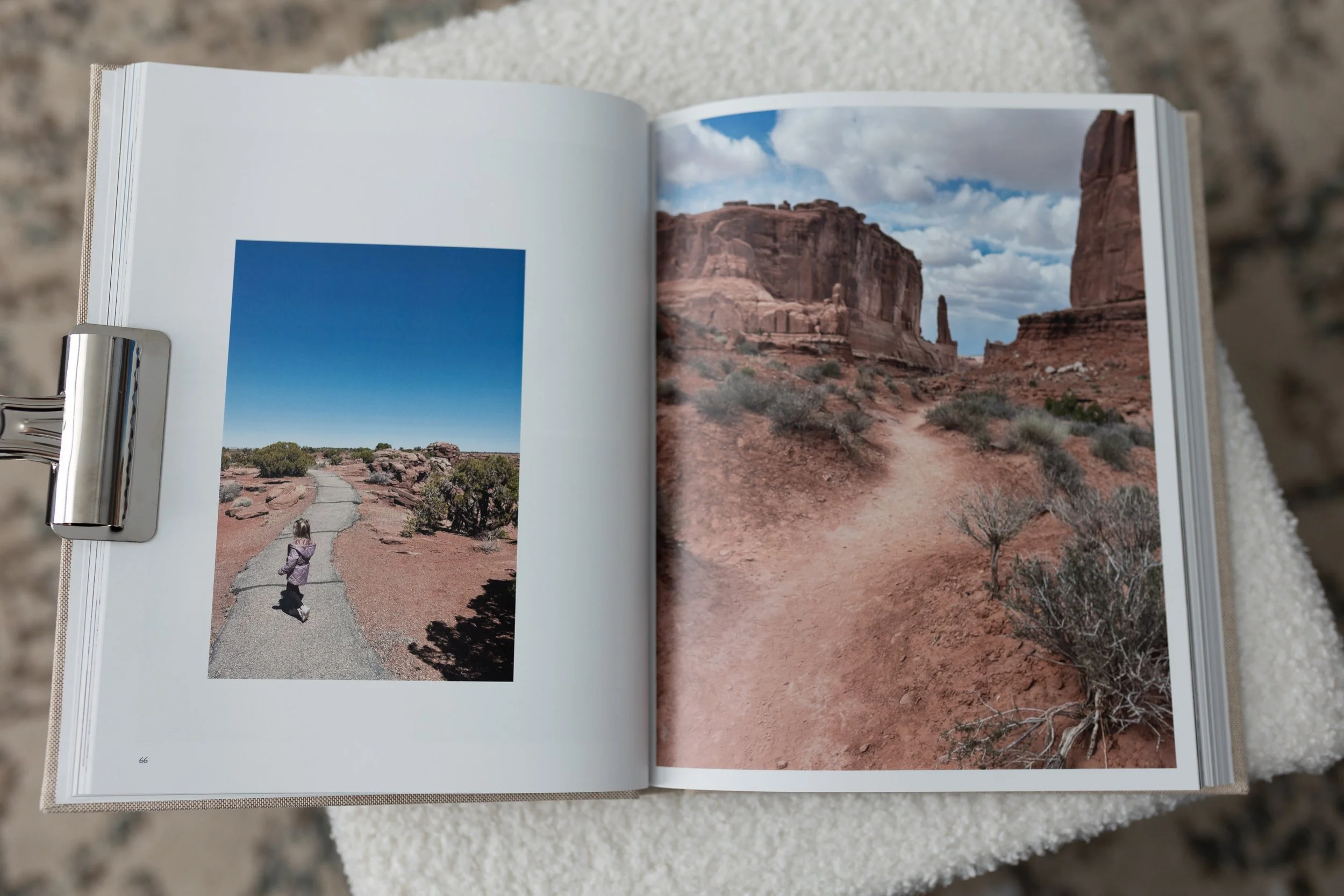
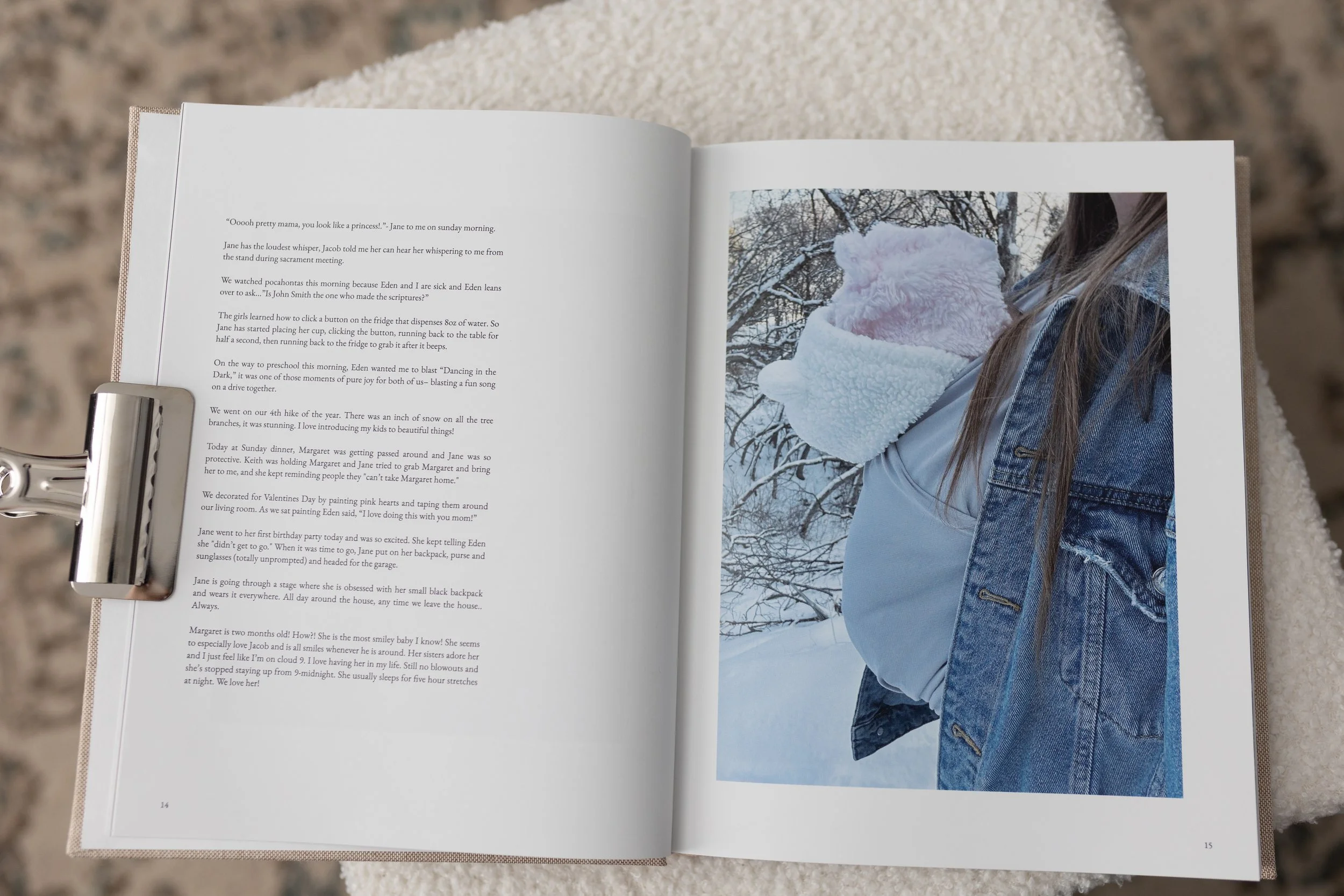
Designing Beautiful Spreads with iPhone Photos
If you’re struggling to create spreads you love, and are working with whatever photos you already have captured, here are two simple adjustments that make a huge difference:
1. Scour your camera roll and include any and all landscape images you can find.
These don’t have to be perfect images, but when you’re selecting photos to include in your archives, don’t just throw in your favorite images of your child smiling, include images that will tell a larger story (like a photo of your tent or a photo of a landscape etc.) Use what you have!!
2. Increase your white space.
White space is your best friend when designing with phone images. Instead of crowding a page with many small photos, let one or two breathe. A little margin instantly elevates a spread and makes even a simple image feel artful and calm. Minimal layouts especially flatter iPhone photography.
Remember: design can elevate any image.
“But I Just Want Prettier Photos…”
If you’re in the camp of wanting beautiful images but feeling held back because you don’t own a “nice” camera, here are my best tips:
1. Believe that anyone can be a photographer.
Photography isn’t about owning equipment — it’s about noticing beauty. It’s about light. It’s about connection. It’s about paying attention.
The more you intentionally look for beauty in your everyday life, the more naturally you’ll begin to capture it. Train your eye. Slow down. Observe. Practice seeing before you click.
2. Use what you have.
Truly — whatever camera you have will work.
Your iPhone. Your grandpa’s old film camera. A hand-me-down digital camera. An expensive DSLR. They are all tools. What matters most is how you see.
A meaningful image of your toddler’s syrup-covered fingers will always matter more than a perfectly sharp, technically flawless photo with no feeling behind it.
3. Capture “people, places, and things.”
Instead of only photographing your child smiling at the camera, widen your perspective.
Photograph:
The house you’re raising them in
Their favorite stuffed animal
The way their shoes look kicked off by the door
The playground you visit every Tuesday
Your own hands holding theirs
Years from now, those contextual images will mean just as much — if not more — than another posed smile.
4. Choose candids over perfection.
Of course it’s sweet to have everyone smiling at the camera. But some of the most powerful images are the unplanned ones: belly laughs, meltdowns, quiet concentration, messy hair, real life.
Candid moments feel alive. They tell the story.
Let go of the pressure to create a perfectly styled image. Document what is true.
5. Practice with intention.
Like anything, photography improves with practice. Challenge yourself to photograph each season intentionally. Look up simple photo prompts. Try capturing the same corner of your home in different lighting. Notice how morning light differs from evening light.
The more you practice noticing and capturing beauty, the better your images will become — not because your camera changed, but because you did.
If you want prompts to help you get more creative with the photos you’re taking, sign up for my Story Photo Email Challenge!
At the end of the day, your children will not flip through your albums and critique sharpness or dynamic range.
They will look for themselves.
They will look for you.
They will look for proof that their ordinary days were worth preserving.
And whether those photos were taken on a DSLR, a film camera, or your iPhone — what will matter most is that you chose to document your life.
