The Evolution of Scrapbooking
Scrapbooking has come a long way—from handwritten journals and family photo albums to apps that automatically print your camera roll.
But somewhere along the way, something important got lost.
If you’ve ever felt overwhelmed by thousands of photos on your phone—or guilty for not finishing a scrapbook—you’re not alone.
In this post, we’re diving into the history of scrapbooking and photo books, how we got to where we are today, and the new approach modern mothers are turning to for meaningful memory keeping.
1. The Roots: Before Photography (1400s–1800s)
Scrapbooking didn’t start with photos—it started with the human instinct to document and remember.
Early forms
Medieval journals (1400s): People recorded daily life, events, and reflections.
Renaissance “commonplace books”: Collections of quotes, recipes, ideas, and copied text—basically curated knowledge books.
Family Bibles (1500s–1800s): Used to record births, deaths, and marriages—early “family archives.”
These weren’t decorative—they were functional memory systems.
2. The Birth of Scrapbooking (1800s)
Scrapbooking as we recognize it emerged when printed materials became abundant.
What changed:
Industrial printing made cards, newspapers, and ephemera widely available
People began pasting:
Newspaper clippings
Invitations
Letters
Early photographs
Key milestone:
The word “scrapbook” appears around 1821
Fun fact: Mark Twain patented a self-adhesive scrapbook (1872)—a huge early innovation.
3. Photography Changes Everything (1900–1970s)
The invention of accessible photography transformed scrapbooking.
The Big Shift:
The Kodak Brownie camera (1900) made photography:
Affordable
Everyday
Personal
Now people weren’t just saving scraps—they were saving life itself.
Typical format:
Photo albums with:
Glued-in pictures
Handwritten captions
Chronological storytelling
4. The Scrapbooking Boom (1980s–2000s)
This is the era most people think of when they hear “scrapbooking.”
What drove the boom:
Rise of craft culture
Direct sales companies like Creative Memories and Magazines like Creating Keepsakes.
What scrapbooking looked like:
12x12 layouts
Decorative paper, stickers, embellishments
Highly designed pages
Social element:
“Crops” (scrapbooking parties) became popular
5. The Digital Disruption (2000s–2010s)
Digital photography changed everything again.
Key shift:
Photos became:
Unlimited
Cheap (or free)
Constant
This created a new problem:
Too many photos. Not enough systems.
So then new solutions arrived:
Digital scrapbooking software
Early photo book companies like:
Shutterfly
Blurb
6. The “Simplification Revolution” (Project Life Era)
Around 2009 Becky Higgins introduced: Project Life
It was revolutionary because it answered a huge pain point: “I want to document my life… but I don’t have time.”
Pocket pages instead of full layouts
Pre-designed cards
Faster, simpler system
Cultural shift:
From perfection → consistency
From events → everyday life
7. The Smartphone + Automation Era (2015–Present)
Our current memory keeping era includes:
Smartphones = constant documentation
Cloud storage = massive archives
AI + apps = automation
New players like Chatbooks introduced low effort/automatic memory keeping
8. A BETTER WAY TO PRESERVE YOUR MEMORIES
Automation and AI tools are now available to assist in creating photo books and memory keeping, but I worry we have lost something important along the way.
The Magic of Memory Keeping
As I’ve engaged in memory keeping throughout my life, I’ve experienced the benefits:
Deep, profound gratitude
Newfound meaning in the life I’ve lived
Joy as I exercise creativity
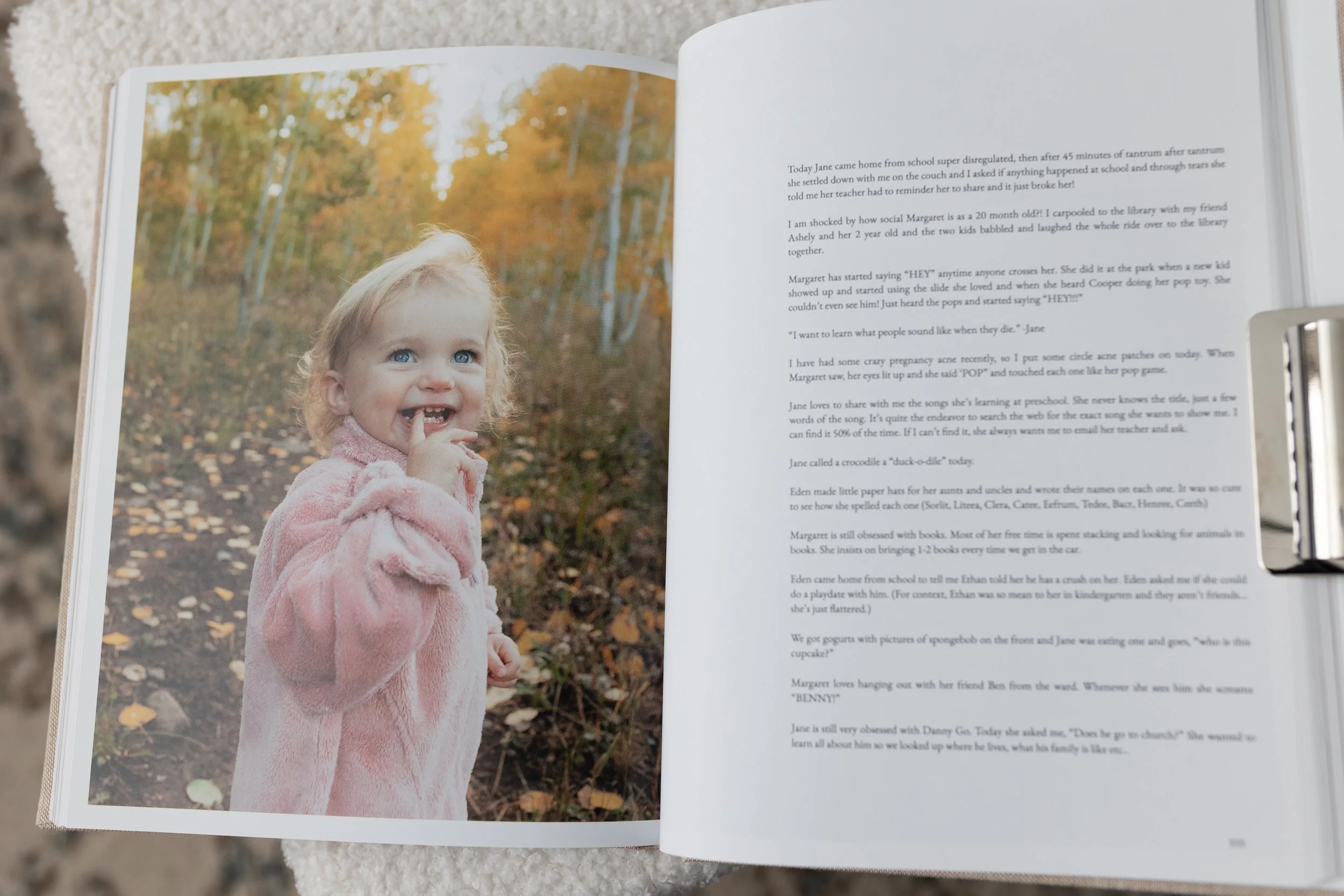
I’m here to offer a new way to memory keep. One that bridges modern conveniences (digital photo books!) with intentionality.
You can sign up for chatbooks and get your photos printing in a few hours, but you will miss out on all the magic along the way-the opportunity to reflect and re-write your story.
CONCLUSION
Scrapbooking has evolved dramatically over the years.
But at its core, the goal has always been the same:
To remember a life well-lived.
But the best systems today aren’t the fastest—
They’re the ones that help you feel your memories again.